Manufacturing Process
Forestali’s activities are organised into two main areas:
• adhesives production;
• production of special fabrics for the footwear industry.
Both production activities are organised in a discontinuous batch way and are started according to specific market demands.
Adhesive manufacturing
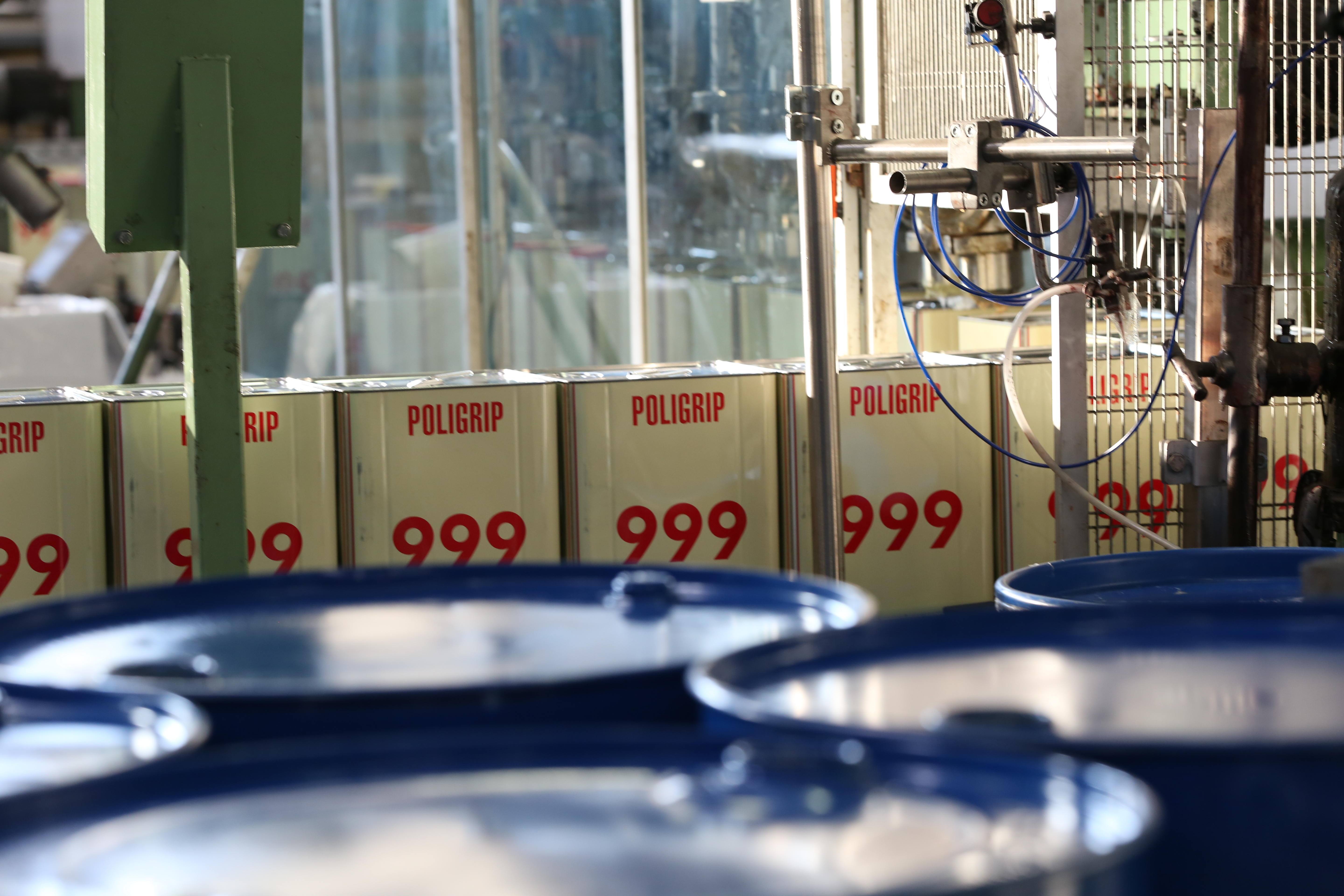
The production of adhesives constitutes the most properly chemical aspect of the manufacturing processes. The main adhesives produced are:
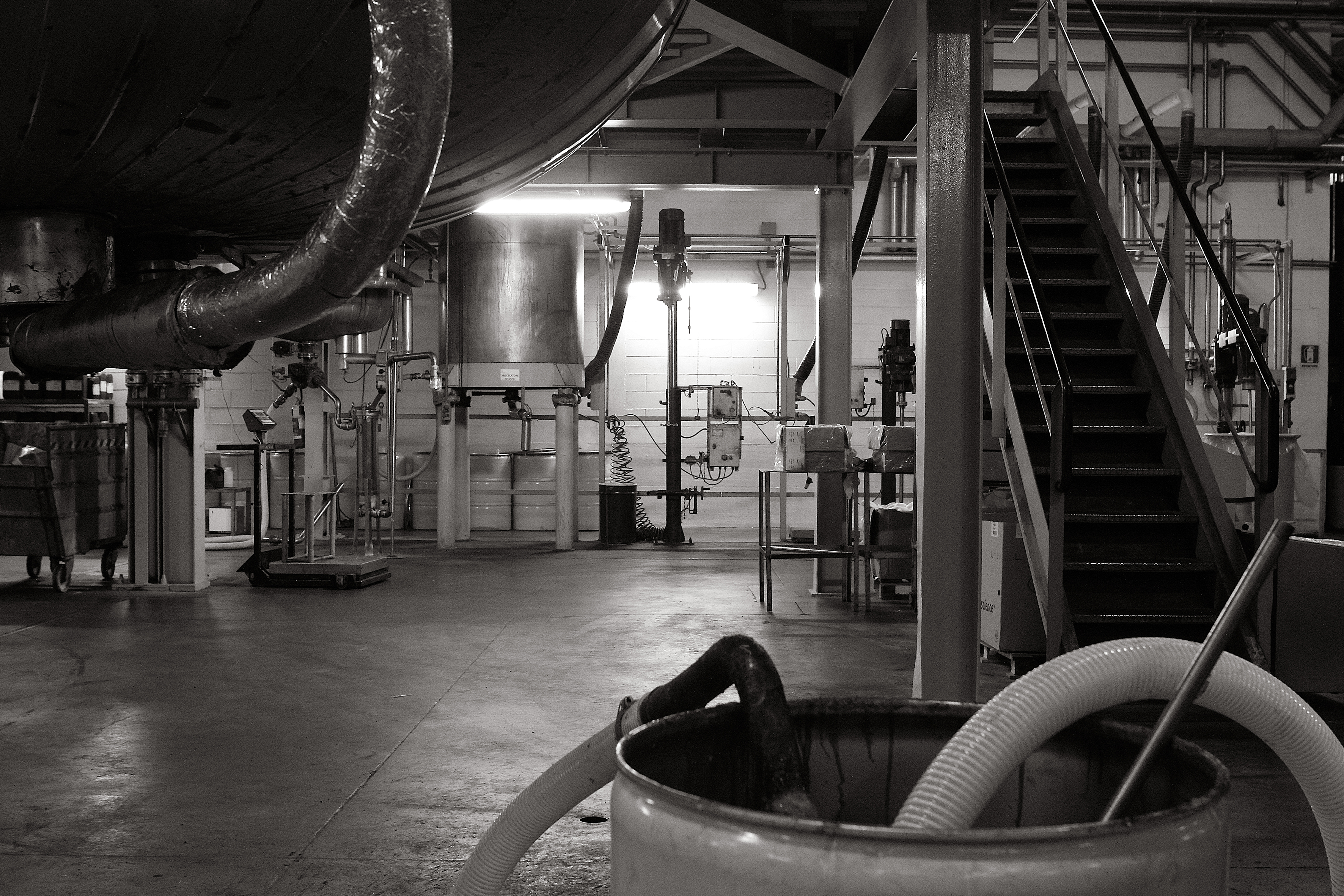
They are prepared by dissolving the solid components in a suitable solvent mixture loaded into a mixer at room pressure and temperature. Loading operations are performed under local exhaust, conveyed to an emission point fitted with activated carbon filters. After dissolution and before discharge for packaging, the adhesive is checked for solid content and viscosity.
They are prepared by dissolving, in suitable solvent mixtures, the polyurethane polymers obtained from the reaction between isocyanates and polyols in reactors at room pressure and temperature.
Loading operations are performed under local exhaust, conveyed to an emission point fitted with activated carbon filters. After the addition of additives and stabilisers, the adhesive is checked for solid content, viscosity, initial heat resistance and gas chromatographic analysis of solvents.
The raw materials, dispersed in water, are mixed under slow stirring at room temperature in an atmospheric dissolver, together with small amounts of various additives such as antifoaming agents, antioxidants and vulcanisation catalysts.
Fabrics production
The term fabrics refers to particular items used by the footwear industry such as toe puffs, counters, linings and stiffeners, obtained by subjecting a backing fabric to suitable treatments. The manufacturing processes involve several stages such as impregnation, hot melt coating, powder coating, co-extrusion and direct coating. These stages are not necessarily sequential and may follow a different order each time, depending on the formulations required.
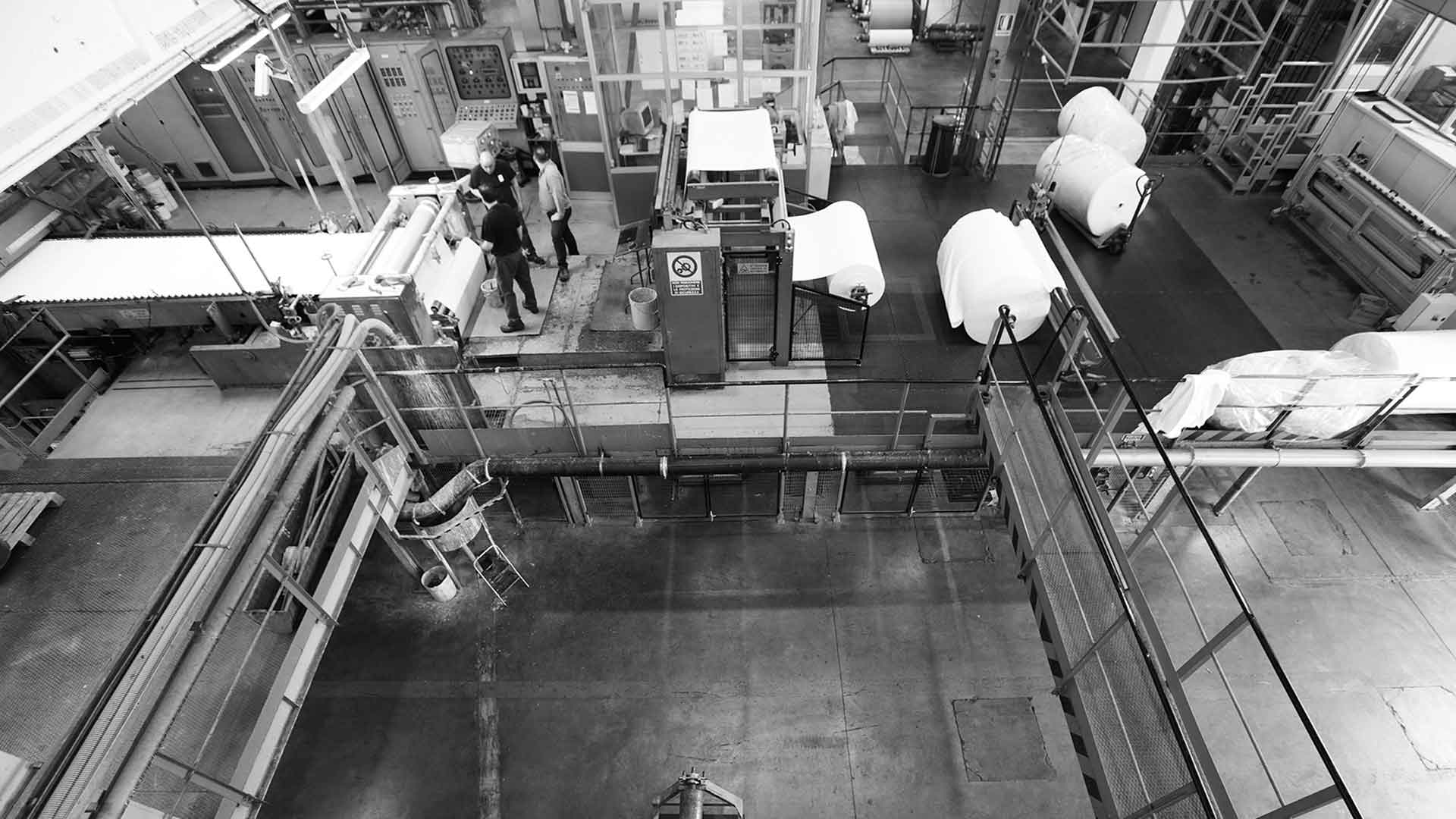
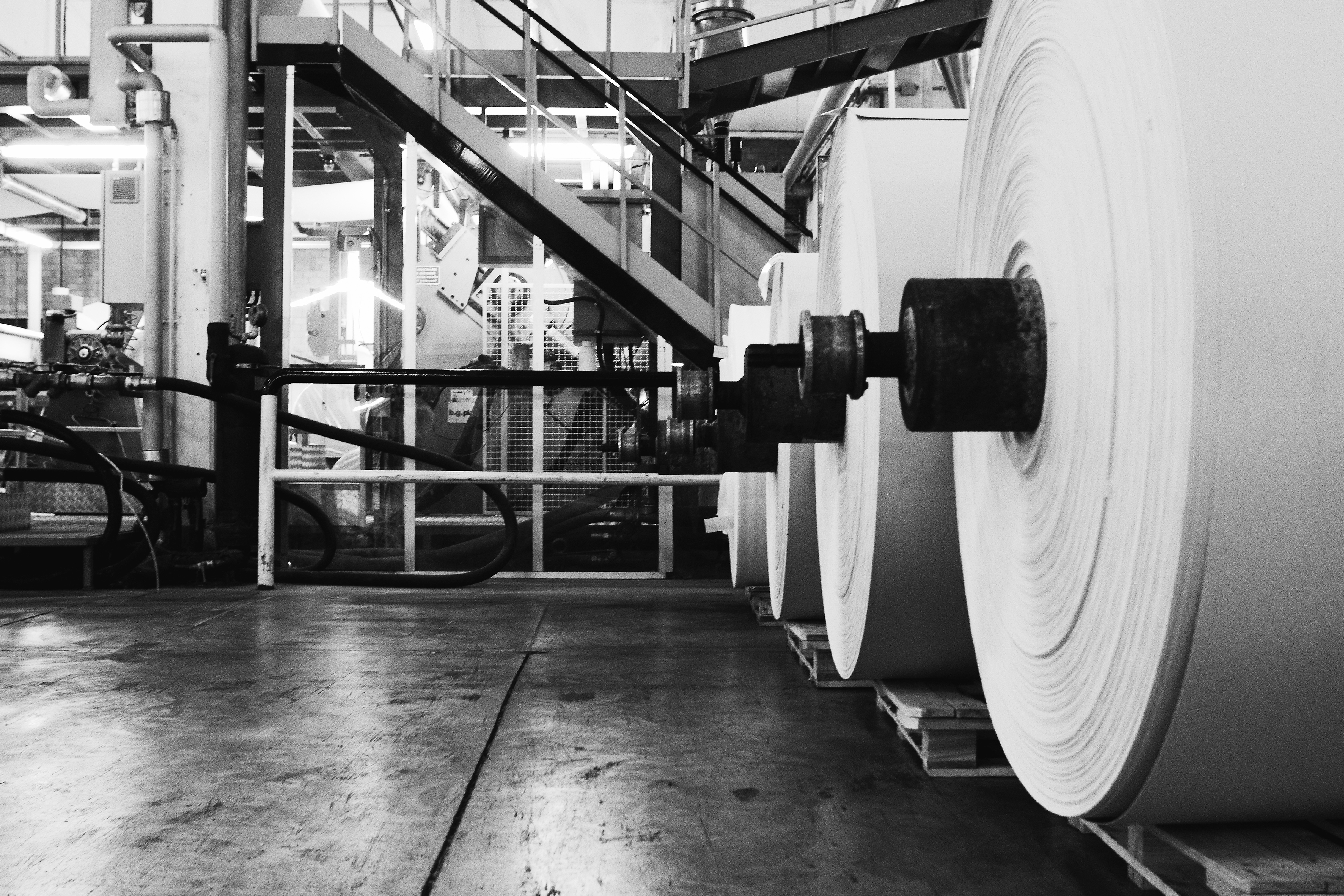
This machine impregnates a fabric with a suitable polymer composition as it passes through the tank containing the sizing solutions; the impregnated fabric then moves into a heated and ventilated zone where the water is removed. The machine is equipped with automatic weight and thickness control systems, and the resulting semi-finished product is wound into reels or cut into sheets (finished product).
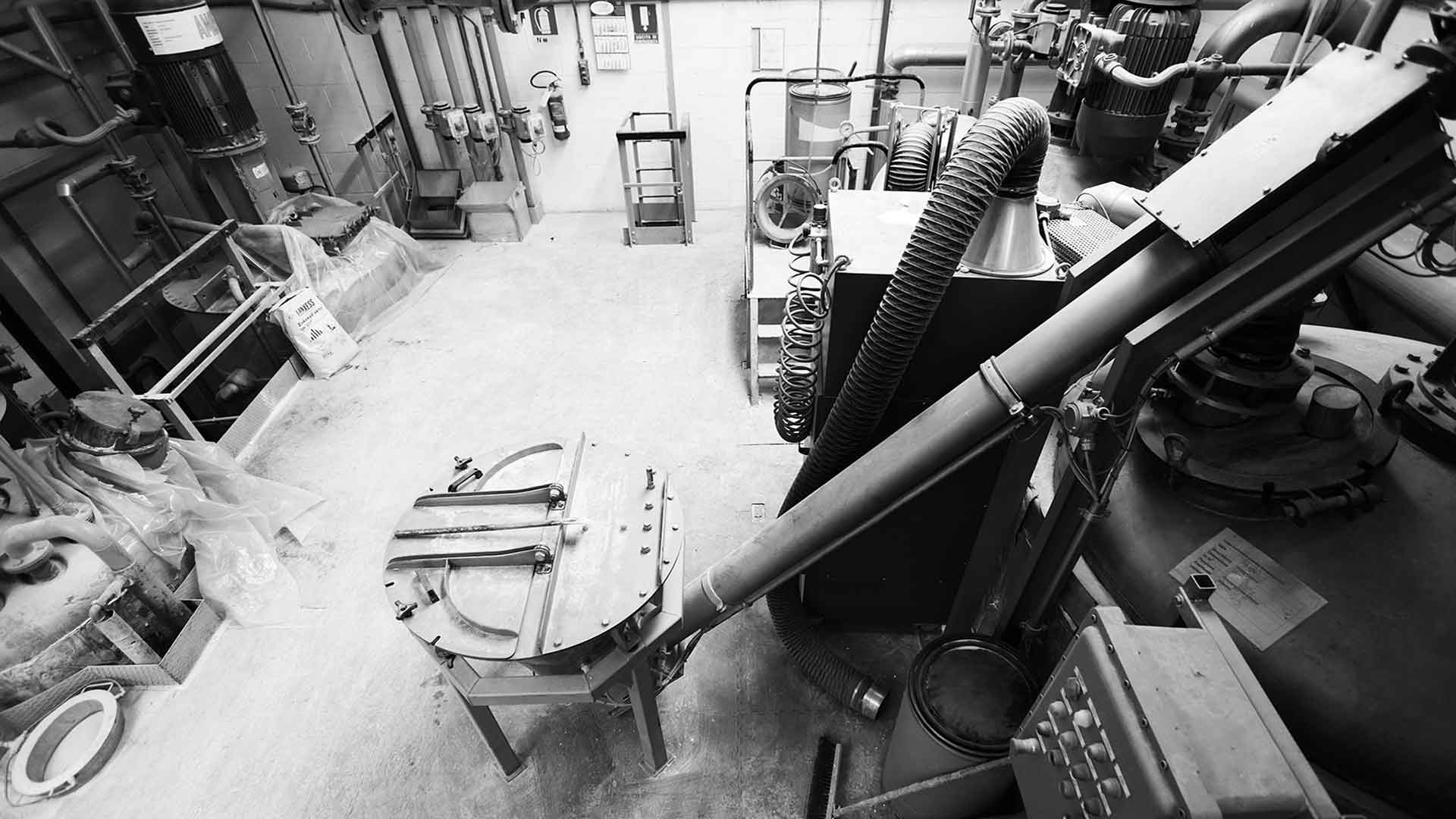
Such operation consists in the homogenization of the various components, in atmospheric dispersers fitted with a stirrer and with loading systems for the raw materials required by the recipes.
The line applies hot melt onto impregnated substrates by melting the adhesive at temperatures between 160° and 220°C and feeding it to the coating unit, which consists of a flat-head extruder.
The line produces special types of toe puffs and counters in polymers or polymer blends with particular application properties: multilayer films of polymer material. It consists of a complete hopper-fed polymer supply line with cooling and winding calenders.
The line is used to apply powder products onto impregnated substrates. A “spreader” releases a defined amount of powder onto the substrate, which is then fed into an oven held at 130°-170°C, causing the powder to melt. At the outlet there is a water-cooled calender at 7°-8°C through which the product passes before being cut or reeled. All processing stages are equipped with equipment and instruments to control and minimise environmental impact and accident risk. The emission points into the atmosphere are fitted with activated carbon scrubbers, a cryogenic solvent recovery plant, water scrubbers, bag filters and an afterburner. Washing water is collected in a dedicated tank and subsequently treated in a primary plant before being fed back into production. All waste is appropriately sorted by type and recovered or disposed of.